Channel Your Drama Into Entertainment
Two Very Different Things
There’s the drama you tell, and the drama you live in. They get treated as the same trait and they really aren’t.
The first one is a skill. Timing, exaggeration, knowing which detail to make ridiculous and which to leave alone. Used well, it makes you good company.
The second one is a weather system, and everyone standing nearby gets rained on.
The useful move is getting deliberate about which is which. Put the drama on the stage, on purpose, and keep it out of your Tuesday afternoon.
Everyone Knows You’re Embellishing
This is the bit people get wrong when they call storytelling dishonest.
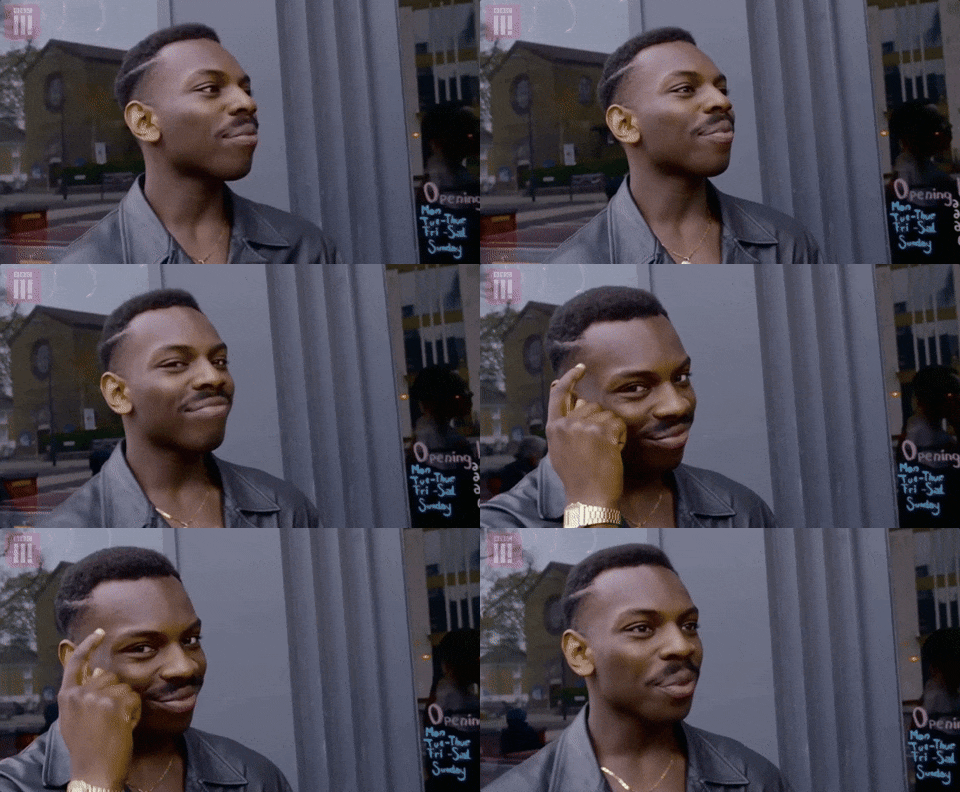
When I tell a story I’ll stretch things. The queue was enormous. The bug had been there since the Bronze Age. My reaction was completely proportionate, thank you. Nobody listening thinks I’m filing a legal deposition. The stretching is the form, and the listener is in on it.
That shared understanding is what makes it work. It isn’t a claim about facts, it’s a claim about how something felt, and feelings are allowed to be a bit oversized. If I say a deploy took a thousand years, nobody reaches for a calendar.
Comedians live on this line. The good ones move constantly between hopeless and heroic, and it lands because you can tell they’re steering. It’s controlled. That’s the difference between a bit and a breakdown.
Why It Actually Makes You More Human
Here’s the part I didn’t expect.
Telling stories about overreacting to things makes other people relax. If I admit I lost twenty minutes to a misplaced semicolon and took it personally, whoever’s listening stops pretending that’s never happened to them. It lets people know we all share the same daft thoughts and feelings, and that there’s no judgement going on here.
Relentlessly polished people are exhausting. Someone who only ever reports competence gives you nowhere to stand. A bit of self-directed drama is an invitation.
The trick is that you have to be the butt of it. Self-deprecating drama is generous. Drama where you’re the wronged hero of every anecdote is a completely different product, and people can smell it immediately.
Where This Falls Down
Read the room, obviously.
If your story depends on the facts being right, keep to the facts. Incident reviews, estimates, anything where somebody is about to make a decision based on what you said. Stretching the truth there isn’t charming, it’s just unreliable. Save it for the pub.
Some rooms don’t want it either. Plenty of people are perfectly warm and simply don’t traffic in embellishment, and performing at them is a bit like doing a routine at someone who asked you a direct question.
And there’s a real line between entertaining drama and attention-seeking. Constantly dramatic people give the impression their lives are permanently spilling over the edges. It stops being a story and turns into a request for management. Everyone gets tired of it, and worse, when something genuinely does go wrong nobody can tell the difference.
Controlled is the whole thing. That’s what separates a bit from a breakdown.
How I Try to Keep It Straight
- Decide whether you’re informing or entertaining before you open your mouth
- Make yourself the idiot in the story, never the victim
- Exaggerate the feeling, never the facts anyone might act on
- If nobody laughed and you’re still going, you’ve moved from a story to a complaint
- Keep the real crises for the two or three people who actually signed up for them
The peace stays off the stage. The drama goes on it, on purpose, and comes back off again when you’re finished.

Until next time, happy coding!